
Understanding 300 Mesh Stainless Steel Screen Applications and Performance


In the demanding world of construction and industrial flooring, the integrity of concrete is paramount. Our high-strength welded wire mesh for cement is engineered to provide superior reinforcement, crack control, and structural longevity. Manufactured from cold-drawn steel wire, precision-welded at every intersection, this mesh acts as an integral tensile skeleton within concrete slabs, significantly enhancing load-bearing capacity and resistance to thermal stress and shrinkage. Ideal for a vast range of commercial, industrial, and civil applications, our product is the reliable choice for contractors and engineers worldwide who prioritize durability, safety, and compliance with international standards.
Our welded wire mesh is not a commodity; it's a critical component engineered for performance. We combine advanced manufacturing techniques with stringent quality control to deliver a product that consistently exceeds expectations on the job site.
Our welded wire mesh is produced in accordance with major international standards, including ASTM A185/A497, BS 4483, and AS/NZS 4671. The table below outlines our core product range. Custom specifications are available upon request.
| Model/Designation | Wire Diameter (mm) | Mesh Size (mm) | Sheet Dimensions (m) | Standard Finish | Primary Application |
|---|---|---|---|---|---|
| WMM-50 | 4.0 - 5.0 | 150 x 150 | 2.4 x 6.0 / 2.0 x 5.0 | Mill / Galvanized | Light duty slabs, pathways |
| WMM-100 | 5.0 - 6.0 | 100 x 100 | 2.4 x 6.0 / Custom | Mill / Galvanized | Residential floors, driveways |
| WMM-150 (Square Mesh) | 6.0 - 8.0 | 150 x 150 | 2.4 x 6.0 / 2.0 x 5.0 | Mill / Galvanized | Industrial flooring, warehouse slabs |
| WMM-200 (Rectangular Mesh) | 7.0 - 10.0 | 100 x 200 | 2.4 x 6.0 / Custom | Mill / Galvanized | Heavy-duty paving, airport aprons |
| WMM-300 (Trench Mesh) | 10.0 - 12.0 | 200 x 200 / Custom | 2.0 x 6.0 / Custom | Mill / Epoxy Coated | Foundations, civil engineering, retaining walls |
| WMM-Roll (Light Duty) | 2.0 - 4.0 | 50 x 50 / 100 x 100 | 1.0m x 50m (Roll) | Galvanized / PVC Coated | Stucco backing, thin overlays, plaster reinforcement |
The versatility of welded wire mesh for cement makes it indispensable across the construction spectrum. Its primary function is to absorb tensile forces that concrete alone cannot withstand.
Choosing the right wire mesh for cement directly impacts project cost, timeline, and long-term performance. Our welded mesh offers distinct benefits.
In a global market, partnership matters. We are more than a manufacturer; we are a solutions provider dedicated to supporting your project's success from specification to delivery.
The primary purpose of wire mesh for cement is to provide tensile strength. Concrete is very strong in compression but weak in tension. The embedded steel mesh absorbs these tensile forces from bending, shrinkage, and temperature changes, preventing cracks from widening and holding the concrete together.
This depends on the application. Welded wire mesh is typically more cost-effective and efficient for thinner slabs (4-8 inches) like residential floors, pavements, and light industrial floors where it excels at controlling shrinkage cracks. Rebar is often used for thicker, heavily loaded structural elements like foundations, beams, and columns where higher tensile strength and the ability to be bent and shaped are required. Our technical team can help you decide based on your project's specific load requirements.
This is our internal model number. "WMM" stands for Welded Mesh Mesh, and "150" typically refers to the characteristic mesh opening in millimeters (e.g., 150mm x 150mm). The full specification, including wire diameter and sheet size, is detailed in the technical table. Always refer to the detailed spec sheet for precise engineering data.
Absolutely. For projects in coastal areas, industrial settings, or where de-icing salts are used, we strongly recommend our hot-dip galvanized wire mesh for cement. For even greater protection, such as in wastewater treatment plants or marine structures, we can supply epoxy-coated or stainless-steel mesh options.
Yes, customization is a core part of our service. We can produce mesh sheets to non-standard dimensions, with specific rectangular openings, or even cut-to-shape panels for complex precast elements. Providing detailed drawings or specifications allows us to quote accurately and manufacture a product that minimizes on-site labor for you.
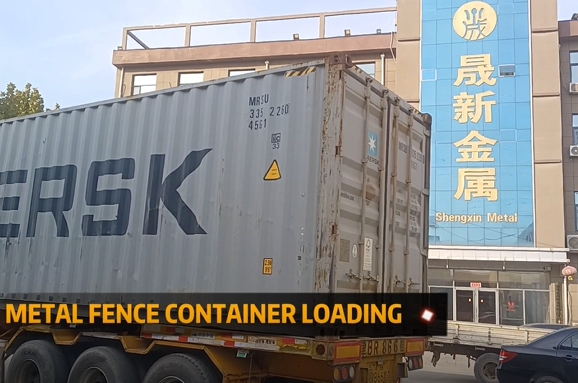
Standard mesh sheets are securely bundled with steel straps on wooden pallets for safe transport. Rolls are individually wrapped. We ship via container (FCL or LCL) worldwide, with Incoterms (typically FOB, CFR, or CIF) agreed upon prior to order confirmation. We handle all export documentation to ensure a smooth customs clearance process.
PREV:wire mesh size
Understanding 300 Mesh Stainless Steel Screen Applications and Performance

Understanding 304 Stainless Steel Mesh Screen for Industrial Applications
Strategic Custom Metal Fabrication Services

Detailed Analysis of 2mm Stainless Steel Mesh Properties and Applications
Understanding 20 mesh stainless steel screen Applications and Performance
Ready to move your project from technical blueprint to precision reality? Whether you require large-scale CNC machining, complex structural assembly, or specialized fabrication with rare alloys like Titanium and Nickel, our engineering team is prepared to assist. At metalfabricationcn.com, we solve the manufacturing challenges that others find too large or too complex. Reach out today to discuss your specific requirements, and let us help you optimize your supply chain with ISO 9001 certified reliability.