
Comprehensive Guide to Durable 316 Stainless Steel Security Screens

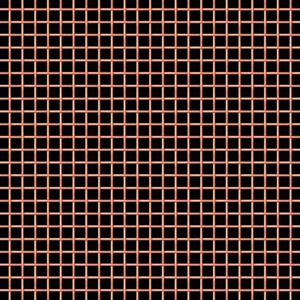
Welcome to the definitive resource for high-quality modelling wire mesh, a versatile and indispensable material for professionals across a spectrum of industries. Our precision-engineered wire mesh is specifically designed for modelling, prototyping, and detailed fabrication work where accuracy, flexibility, and structural integrity are non-negotiable. Unlike standard wire cloth, our modelling wire mesh offers superior formability, allowing it to be cut, shaped, and manipulated into complex three-dimensional forms with ease, while maintaining its dimensional stability. Whether you are creating architectural models, intricate sculptures, filtration prototypes, or composite reinforcement samples, our product provides the perfect balance of workability and strength. Sourced from premium materials and manufactured with exacting tolerances, this mesh is the trusted choice for engineers, artists, designers, and researchers worldwide who demand reliability and precision in their modelling materials.
Our modelling wire mesh stands apart in the market due to a combination of engineered characteristics that cater directly to the needs of precision work. Each feature is designed to enhance usability and deliver consistent, high-quality results in your projects.
To ensure you select the perfect modelling wire mesh for your project, we provide a comprehensive range of specifications. The table below outlines our standard offerings. Custom sizes, metals, and weaves are available upon request for specialized industrial applications.
| Material | Standard Mesh Count (per inch/cm) | Wire Diameter (mm) | Sheet Size (Standard) | Primary Finish | Typical Application Suitability |
|---|---|---|---|---|---|
| Low-Carbon Steel (Annealed) | 10, 20, 30, 40 | 0.25 - 0.71 | 1m x 2m, 4' x 8' | Bright (uncoated) | General sculpting, architectural models, plaster backing |
| Galvanized Steel | 10, 14, 18, 24 | 0.36 - 0.91 | 1m x 2m, 4' x 8' | Zinc-Coated | Outdoor models, demonstration filtration units, protective screens |
| Stainless Steel 304 | 30, 40, 50, 60, 80, 100 | 0.10 - 0.40 | 1m x 1m, 1m x 2m | Mill, Electro-Polished | Chemical process prototypes, fine art sculpture, high-detail architectural models |
| Aluminum | 10, 16, 24 | 0.40 - 0.80 | 1m x 2m | Mill, Anodized (optional) | Aerospace/automotive mock-ups, lightweight structural models, display work |
| Brass | 20, 30, 40 | 0.15 - 0.30 | 0.6m x 1.2m | Mill | Jewelry design models, detailed decorative elements, specialized filtration prototypes |
The adaptability of our modelling wire mesh makes it a critical component in numerous professional fields. Its primary function is to serve as a stable, formable armature or framework that can be built upon or integrated into a final design.
Architects and urban planners utilize finer gauge modelling wire mesh to create detailed massing models, intricate façade screens, and landscape topography. Its ability to hold plaster, clay, or foam coatings makes it ideal for creating realistic surface textures and forms.
From conceptual grilles and vents for automotive design to functional prototypes of filters, sieves, and shields, this mesh allows designers to test form, fit, and even basic function before committing to expensive production tooling.
Sculptors prize this material as a foundational armature for both small and large-scale works. Its strength allows for ambitious extensions, while its pliability enables the capture of delicate gestures and forms in metal, clay, or paper-mâché.
In labs, modelling wire mesh is used to create custom test rigs, sample holders for composite materials, and scaled models of industrial components like catalyst beds or fluidized bed reactors for process visualization and testing.
Prop makers and display designers use the mesh to build lightweight yet sturdy structures for set pieces, exhibition stands, and decorative elements that can be easily covered with various materials.
Choosing the right modelling wire mesh provides distinct benefits that other substrates like solid metal sheet, foam, or wood cannot match.
In a global market, partnership matters. We are not just a supplier; we are a technical resource dedicated to the success of your projects.
For general purpose use, such as in classrooms or for basic sculptural work, we recommend our low-carbon steel (annealed) modelling wire mesh in a 20 or 30 mesh count. It is highly formable, cost-effective, and readily accepts most coatings. It provides an excellent balance of ease of use and durability for learning and experimentation.
Yes, but the suitability depends on the material. Low-carbon steel and galvanized mesh can be spot-welded or soldered with appropriate fluxes. Stainless steel grades require TIG welding for a clean join. Aluminum and brass meshes are best joined with specialized solder or mechanical fasteners. We advise testing on a small sample first.
For clean cuts, use sharp tin snips, heavy-duty scissors (for finer meshes), or a rotary tool with a cutting disc. For large-volume or precision work, a hydraulic shear or laser cutter is ideal. Wearing appropriate cut-resistant gloves is always recommended for safety.
Absolutely. We encourage clients to request sample swatches of our modelling wire mesh to test its formability, compatibility with their materials, and overall suitability for the project. This helps ensure complete satisfaction with your final order.
Lead times for custom orders vary based on the specification and quantity. Typically, custom production runs require 3-5 weeks from order confirmation to shipment. We provide detailed timelines and regular updates during the manufacturing process for complete transparency.
For permanent or outdoor use, we strongly recommend our stainless steel (304 or 316 grade) modelling wire mesh or heavily galvanized steel. These materials offer superior corrosion resistance to withstand environmental exposure, ensuring the longevity and integrity of your model or installation.
PREV:mesh wire sizes
Comprehensive Guide to Durable 316 Stainless Steel Security Screens
Understanding 12 mesh stainless steel screen Applications and Technical Details

Detailed Analysis of 24 mesh stainless steel screen Applications and Performance
Strategic Custom Metal Fabrication Services
Understanding 20 mesh stainless steel screen Applications and Performance
Ready to move your project from technical blueprint to precision reality? Whether you require large-scale CNC machining, complex structural assembly, or specialized fabrication with rare alloys like Titanium and Nickel, our engineering team is prepared to assist. At metalfabricationcn.com, we solve the manufacturing challenges that others find too large or too complex. Reach out today to discuss your specific requirements, and let us help you optimize your supply chain with ISO 9001 certified reliability.