
Understanding the Versatility of 10 mesh stainless steel screen Applications

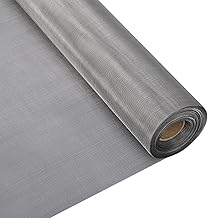
In the demanding world of construction and industrial manufacturing, the integrity of joints and seams is paramount. Wire mesh tape stands as a fundamental, yet highly engineered, component designed to provide superior reinforcement and prevent cracking in a wide array of applications. This self-adhesive or embedded tape, constructed from a galvanized or stainless steel mesh, is the professional's choice for creating durable, long-lasting surfaces. As a leading supplier in the global industrial marketplace, we provide premium-grade wire mesh tape that meets the rigorous standards of contractors, drywall installers, and fabricators worldwide. This product page details the specifications, benefits, and applications of this indispensable material.
Our wire mesh tape is a high-tensile reinforcement material specifically engineered to bridge gaps and reinforce weak points in various substrates. Unlike standard paper tape, the open-weave design of the fiberglass or metal mesh allows joint compound or plaster to ooze through and mechanically lock in place, creating a bond that is significantly stronger and more resistant to stress-induced cracking. This product is essential for creating monolithic, stable surfaces in drywall construction, plaster repair, and even in composite material fabrication. Available in a range of widths, lengths, and material compositions, our wire mesh tape is a versatile solution for both new construction projects and critical repair work, ensuring structural integrity and a flawless finish.
Our wire mesh tape is produced to exacting tolerances to guarantee consistent performance. The table below outlines our standard product range. Custom specifications regarding material, width, length, and mesh count are available for bulk OEM and B2B orders.
| Specification | Standard Option 1 | Standard Option 2 | Standard Option 3 | Premium Option |
|---|---|---|---|---|
| Base Material | Galvanized Mild Steel | Galvanized Mild Steel | Stainless Steel 304 | Stainless Steel 316 |
| Mesh Type | Woven | Woven | Woven | Welded |
| Mesh Aperture (mm) | 4x4 | 6x6 | 5x5 | 3x3 |
| Wire Diameter (mm) | 0.4 - 0.5 | 0.5 - 0.6 | 0.3 - 0.4 | 0.4 - 0.5 |
| Standard Width | 50mm, 100mm | 50mm, 100mm | 50mm, 75mm, 100mm | 25mm to 150mm |
| Roll Length | 50m, 100m | 50m, 100m | 50m, 100m | Custom (up to 200m) |
| Backing / Coating | None (Embedded) | Pressure-Sensitive Adhesive | None (Embedded) | High-Temp Adhesive Available |
| Key Application | Drywall Jointing | Quick Plaster Repairs | Wet Area & Exterior Systems | Chemical & Marine Environments |
The versatility of a high-quality wire mesh tape makes it a critical inventory item across multiple sectors. Its core function is to reinforce, but the specific applications are vast.
This is the most common application. The tape is embedded in joint compound over the seams between drywall panels, on inside and outside corners, and around fixtures. It is absolutely essential for creating smooth, crack-free walls and ceilings that can withstand building settlement and everyday vibrations.
In traditional plaster and modern synthetic stucco (EIFS) applications, wire mesh tape is used to reinforce control joints and bridge different substrates (e.g., where wood meets masonry). It prevents the brittle plaster from cracking at these critical stress points.
For repairing cracks in concrete floors, walls, or foundations, a wide, heavy-duty wire mesh tape can be set into an epoxy or hydraulic cement overlay, providing tensile strength and holding the repair material together.
In fiberglass, carbon fiber, and other composite layup processes, the tape can be used to reinforce seams and joints within molds, adding localized strength without significant weight gain. It is also used in the fabrication of insulation jackets and ductwork.
Seams between cement backer boards, used as a substrate for tile, must be reinforced. Wire mesh tape is embedded in thinset mortar over these seams, creating a unified, stable surface that prevents tile cracking.
Choosing the right reinforcement tape directly impacts project longevity and cost. Our wire mesh tape offers distinct advantages.
In a global market, partnering with a reliable and expert supplier is as important as the product itself. Here is why industry leaders trust us for their wire mesh tape requirements.
A: Self-adhesive wire mesh tape has a pressure-sensitive backing for quick, temporary holding during application, ideal for repairs and small areas. Embedded tape (without adhesive) is designed to be fully covered and locked into a bed of joint compound, plaster, or mortar, which provides the permanent bond. For full-scale drywall and plaster work, the embedded method is standard and recommended for maximum strength.
A: Yes, but material selection is critical. For exterior plaster (stucco), EIFS, or exterior cement board applications, you must use a wire mesh tape made from corrosion-resistant materials such as galvanized steel or, for coastal or highly corrosive environments, stainless steel (Grade 304 or 316). This prevents rust stains from bleeding through the finish.
A: Standard drywall joints typically use 50mm (2-inch) wide tape. For corners (both inside and outside), 50mm or 75mm is common as it covers both sides of the corner bead. For reinforcing larger cracks in plaster or concrete, or for seam reinforcement in composite panels, wider tapes (100mm, 150mm) are used to distribute stress over a broader area.
A: For most standard residential drywall, fiberglass tape is adequate and easier for beginners. However, for commercial projects, high-traffic areas, ceilings, or any application where superior crack resistance and fire performance are required, professional contractors often prefer wire mesh tape due to its higher tensile strength and non-combustible nature.
A: Absolutely. As a specialist B2B supplier, we frequently work with OEMs and large contractors to produce wire mesh tape with custom wire gauges, mesh sizes, widths, roll lengths, and specific alloy compositions. Contact our sales engineering team with your project requirements for a tailored quotation.
A: When stored properly in a cool, dry warehouse environment away from direct moisture, our wire mesh tape has an indefinite shelf life. For self-adhesive variants, we recommend using within 18-24 months of manufacture for optimal adhesive performance. Keep rolls in their original packaging until use to prevent dust contamination.
Understanding the Versatility of 10 mesh stainless steel screen Applications
Understanding 300 Mesh Stainless Steel Screen Applications and Performance
Strategic Custom Metal Fabrication Services

Understanding 12 mesh stainless steel screen Applications and Technical Details

Understanding 100 mesh stainless steel screen for Industrial Applications
Ready to move your project from technical blueprint to precision reality? Whether you require large-scale CNC machining, complex structural assembly, or specialized fabrication with rare alloys like Titanium and Nickel, our engineering team is prepared to assist. At metalfabricationcn.com, we solve the manufacturing challenges that others find too large or too complex. Reach out today to discuss your specific requirements, and let us help you optimize your supply chain with ISO 9001 certified reliability.