
Understanding the Versatility of 10 mesh stainless steel screen Applications

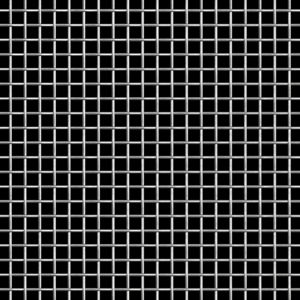
In the demanding world of industrial processing, material separation, and architectural design, the choice of screening medium is critical to operational efficiency and final product quality. Our precision-engineered wire screen mesh stands as a cornerstone solution, offering unparalleled durability, accuracy, and versatility. Manufactured to exacting international standards from a variety of metals and alloys, our woven wire cloth is designed to deliver consistent performance under the most strenuous conditions. This product page details the comprehensive specifications, applications, and inherent advantages of our wire mesh screening products, providing industrial buyers with the essential information needed to specify the ideal solution for their project.
Our wire screen mesh is a high-quality industrial fabric produced by weaving metallic wires in a precise, interlocking pattern. This manufacturing process creates a stable, uniform grid of openings (apertures) that can be tailored to an immense range of sizes, from coarse filtering to micron-level precision. Unlike perforated plates or punched screens, woven wire mesh provides an optimal balance of open area for maximum throughput and structural integrity for long service life. We offer a comprehensive portfolio of weaves—including plain, twilled, and Dutch weaves—in materials such as stainless steel (304, 316, 316L), galvanized steel, brass, and Monel. This wire mesh screen is the go-to component for industries where reliability in sizing, grading, filtering, shielding, or reinforcing is non-negotiable.
The following table outlines the standard specifications for our most commonly requested stainless steel wire screen mesh. Custom configurations in other materials and weaves are available upon request.
| Specification | Details & Range | Standard / Notes |
|---|---|---|
| Primary Material | Stainless Steel 304, 316/316L, Galvanized Steel, Brass, Monel | AISI, ASTM |
| Mesh Count | 2 Mesh to 500 Mesh | Wires per linear inch |
| Wire Diameter | 0.025mm to 3.0mm | Directly influences strength and open area |
| Aperture Size | 100mm to 0.025mm (Microns) | Clear space between wires |
| Weave Type | Plain Weave, Twill Weave, Dutch Weave (Plain & Twilled) | Selection depends on filtration fineness and strength needs |
| Sheet/Roll Dimensions | Width: up to 2.0m; Roll Length: up to 30m (Custom cuts available) | Standard mill rolls or sheared panels |
| Surface Finish | Mill, Electro-polished, Heat Treated | For corrosion resistance or specific hygiene requirements |
The versatility of a robust wire screen mesh makes it indispensable across a spectrum of sectors. Its primary function is to separate, filter, or protect based on particle size.
Choosing our woven wire mesh screen provides distinct operational and economic benefits compared to other separation media like perforated metal or synthetic fabrics.
Selecting a supplier for a critical component like wire screen mesh requires confidence in quality, expertise, and reliability. We differentiate ourselves through a commitment to excellence at every stage.
A: The key parameters are material, mesh count (or aperture size in mm/microns), wire diameter, and weave type. The choice depends on the particle size you need to retain/separate, the chemical and thermal environment, and the mechanical stress (e.g., vibration) the screen will endure. Our technical team can guide you through this selection process.
A: Mesh count refers to the number of openings (and wires) per linear inch. Aperture size is the actual clear opening between the wires, usually measured in millimeters or microns. A higher mesh count generally means a smaller aperture, but the wire diameter also affects this. Always confirm both values for accurate specification.
A: Yes. For fine and microfiltration, we recommend our Dutch weave or Twilled Dutch weave meshes. These specialized weaves use a thicker warp wire and a thinner weft wire, allowing for a very small, tortuous pore path that can reliably filter particles down to single-digit micron levels while maintaining good strength and flow.
A: Absolutely. We encourage and provide free sample swatches of our standard wire screen mesh for material verification and testing. For custom specifications, sample charges may apply but are typically credited against a future production order.
A: Mesh rolls are securely wrapped on sturdy cardboard cores and protected with waterproof material, then packed in wooden crates for ocean freight. Cut panels are packed flat in carton boxes. Standard product lead times range from 10-25 working days, depending on quantity and customization. Expedited options are available for urgent requirements.
For detailed quotations, technical drawings review, or application-specific advice, please contact our sales engineering department. We are committed to providing the highest quality wire screen mesh solutions to enhance the productivity and profitability of your operations.
PREV:glass wire mesh
NEXT:wire mesh furniture
Understanding the Versatility of 10 mesh stainless steel screen Applications

Understanding 100 mesh stainless steel screen for Industrial Applications

Understanding 12 mesh stainless steel screen Applications and Technical Details
Understanding 30 Mesh Stainless Steel Screen Applications and Material Properties
Detailed Analysis of 24 mesh stainless steel screen Applications and Performance
Ready to move your project from technical blueprint to precision reality? Whether you require large-scale CNC machining, complex structural assembly, or specialized fabrication with rare alloys like Titanium and Nickel, our engineering team is prepared to assist. At metalfabricationcn.com, we solve the manufacturing challenges that others find too large or too complex. Reach out today to discuss your specific requirements, and let us help you optimize your supply chain with ISO 9001 certified reliability.