

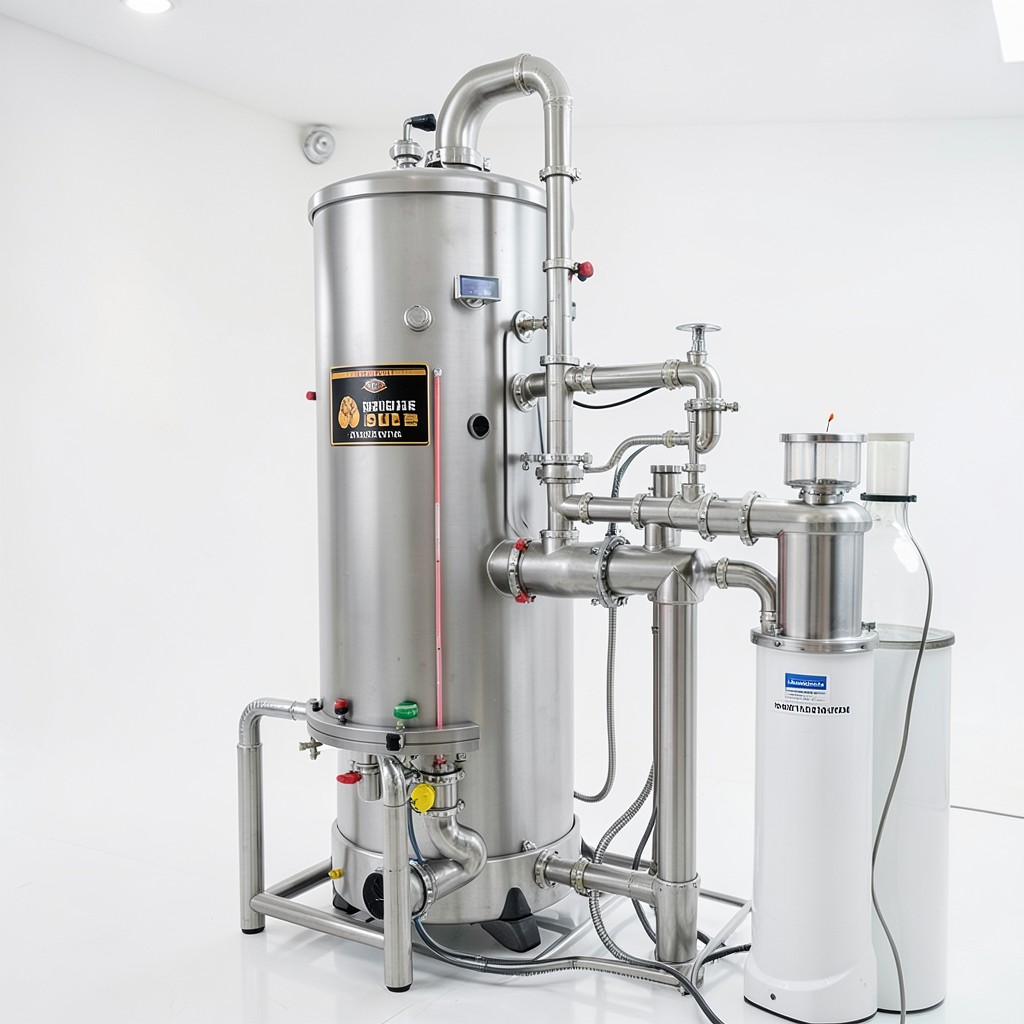

Edible Oil Refinery Hydrogen Thermal Heater
The edible oil refinery hydrogen thermal heater is engineered to deliver precise, high‑efficiency heat for the degumming, neutralisation and deodorisation stages of vegetable‑oil processing. By combusting ultra‑clean hydrogen, the unit provides a flame‑free temperature profile that protects oil quality while meeting stringent food‑safety standards. Designed for continuous‑duty operation, it integrates seamlessly with existing refinery piping and control systems, giving engineers a reliable heat source that reduces carbon footprint without compromising throughput.
How It Works – Direct‑Hydrogen Combustion
The heater utilizes a patented burner where hydrogen gas mixes with ambient air in a precisely metered ratio. A low‑energy spark ignites the mixture, producing a clean flame that transfers heat through a stainless‑steel heat‑exchange coil immersed in the process stream. Because hydrogen burns at a higher temperature with virtually no carbon‑based by‑products, the system achieves rapid heat‑up times and maintains a stable outlet temperature, essential for preserving the sensory and nutritional attributes of edible oils.
Competitive Advantages
- Zero Sulphur Emissions: Hydrogen combustion eliminates SOx and CO₂, aligning with global sustainability targets.
- Food‑Grade Materials: All wetted parts are constructed from 316L stainless steel, complying with FDA and EU food‑contact regulations.
- Rapid Temperature Control: Advanced PID controller offers ±1 °C accuracy, reducing over‑processing risk.
- Modular Design: Units can be linked in series or parallel to match plant capacity, facilitating future expansion.
- Low Maintenance: The flame‑free combustion chamber reduces wear, extending service intervals to 12 months or 10 000 hours.
Typical Specifications (customizable per order)
| Parameter | Range | Unit |
|---|---|---|
| Thermal Output | 250 – 4 500 | kW |
| Operating Pressure | 1 – 10 | bar |
| Maximum Outlet Temperature | 250 | °C |
| Hydrogen Consumption | 0.15 – 2.5 | Nm³/kWh |
| Control Interface | Modbus/TCP, 4‑20 mA | – |
| Warranty | 24 months | – |
Application Scenarios
• Degumming – Provides the low‑temperature, high‑stability heat required to dissolve phospholipids without triggering oxidation.
• Neutralisation – Delivers rapid heating to 80‑100 °C, accelerating the reaction between free fatty acids and caustic soda while maintaining a clean process environment.
• Deodorisation – Supports high‑temperature steam stripping (200‑250 °C) with a uniform heat source, ensuring consistent removal of volatile compounds.
• Continuous‑Flow Systems – Its modular construction allows parallel installation in large‑scale plants handling 500 t/day or more.
Frequently Asked Questions
What is the minimum order quantity (MOQ) for a custom‑rated heater?
Our standard catalogue models start at an MOQ of one unit. For bespoke capacity or material specifications, the MOQ is typically three units to optimise engineering and tooling costs.
Can the unit be adapted for other food‑grade processes?
Yes. The heater’s stainless‑steel heat‑exchange coil and control logic can be re‑configured for dairy, confectionery or bio‑fuel applications, provided the required temperature range stays within the 30‑250 °C envelope.
What is the typical lead time after order confirmation?
Standard models ship within 15‑30 days. Custom designs, including special certifications or unique mounting arrangements, require 30‑45 days depending on engineering complexity.
Is the edible oil refinery hydrogen thermal heater covered by an international safety standard?
All units comply with IEC 61508 functional safety requirements and meet the ISO 22000 food‑safety management system. Certifications are provided with the shipping documentation.